Hyderabad: At a time when cybercrime is growing faster than the systems meant to control it, the Hyderabad City Police has quietly delivered a breakthrough that could redefine policing in India. C-Mitra (Cyber-Mitra), the country’s first AI-powered virtual helpdesk for cybercrime FIRs, is not just a technological innovation; it is a new promise of accessible, empathetic, and citizen-first justice.
Launched on January 9, 2026, C-Mitra has already demonstrated how trust in institutions can be rebuilt when technology is used with purpose.

The National Context: Why India Needed C-Mitra
India is witnessing an unprecedented surge in cybercrime. Online frauds, phishing scams, fake investment schemes, OTP thefts, and identity crimes are no longer isolated incidents; they are everyday realities for citizens across age groups.
While lakhs of cybercrime complaints are reported every year, a significant gap exists between complaints filed and FIRs registered. Fear of police stations, lack of legal understanding, procedural delays, and emotional distress often prevent victims from pursuing formal cases.
C-Mitra directly addresses this national challenge by taking the FIR process to the victim, instead of forcing the victim to navigate a complex system.
Real Impact in Just 10 Days
In its first 10 days of operation, C-Mitra delivered results that many traditional systems struggle to achieve:
- 100+ cybercrime FIRs registered
- Nearly 1,000 victims assisted
- 200+ AI-drafted complaint documents
- FIR copies delivered digitally via SMS
- Zero requirement to visit a police station
These numbers are not just statistics; they represent time saved, anxiety reduced, and confidence restored.
Humanising Justice: Policing with the Victim at the Centre
Behind every cybercrime is a human story; a senior citizen who lost life savings, a first-time internet user confused by legal language, or a financially distressed family unsure of where to turn.
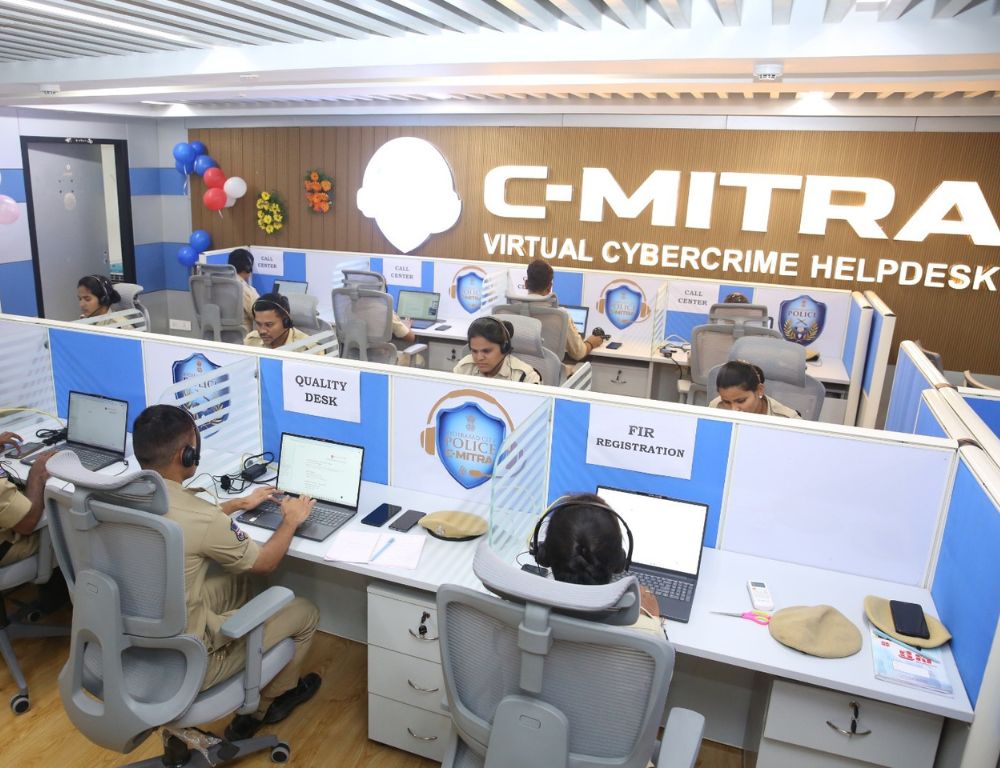
C-Mitra changes that experience. Once a victim reports a cyber offence through the 1930 cybercrime helpline or the National Cyber Crime Reporting Portal, trained C-Mitra officers personally reach out via phone, WhatsApp, or email.
Victims are guided patiently. Their stories are heard. Legal jargon is simplified. The fear of “doing something wrong” is removed. This human-first approach is what makes C-Mitra more than just an app.
Leadership Philosophy: Systems That Serve People
The launch of C-Mitra reflects the leadership style of V. C. Sajjanar, an officer known for innovative thinking, swift decision-making, and people-first policing. Wherever he serves, Sajjanar is recognised for constantly identifying challenges and finding practical, forward-looking solutions, often beyond conventional methods.
A strong advocate of modern policing, he believes technology should simplify systems and build public trust, not intimidate citizens. Under his leadership, C-Mitra was designed not merely as a digital platform, but as a support mechanism for victims, especially senior citizens, first-time internet users, and financially distressed complainants.
By blending innovation with empathy, Sajjanar continues to set an example of how visionary leadership can transform policing into a truly citizen-centric service.
The result is a system where:
- AI drafts legally accurate complaints
- Human officers ensure empathy and clarity
- Victims feel supported, not processed
This balance between innovation and compassion defines modern policing.

How C-Mitra Works: Simple, Safe, and Smart
- Report the Crime
Victims report cyber offences through official cybercrime channels. - Personal Outreach
C-Mitra officers contact the victim to understand details and documents. - AI-Drafted FIR
Artificial intelligence prepares a legally vetted complaint with relevant sections. - Easy Submission
Victims sign and submit via post, courier, or drop boxes. - Digital Confirmation
FIR copy is sent directly to the victim’s mobile phone.
The entire process ensures speed without sacrificing accuracy or dignity.
A Policy Model for India
C-Mitra is no longer just a Hyderabad initiative; it is a policy template waiting to be scaled.
Experts believe similar AI-assisted, human-guided systems can be adopted across:
- Metropolitan cities
- Cybercrime-prone districts
- States facing FIR backlogs
By positioning Hyderabad as a testing ground for future policing, C-Mitra offers policymakers a ready, proven framework for national replication.

Cybercrime in India: Year-Wise Cases and Major Fraud Types
India has witnessed a sharp and consistent rise in cybercrime cases over the last few years, driven by rapid digital adoption, online payments, and increased internet penetration.
Year-Wise Cybercrime / Cyber Fraud Cases in India (Approximate)
| Year | Reported Cybercrime / Fraud Cases | Key Observations |
|---|---|---|
| 2018 | ~2.1 lakh cases | Early rise in online frauds and hacking cases |
| 2019 | ~3.9 lakh cases | Increase in phishing and financial frauds |
| 2020 | ~11.5 lakh cases | Sharp spike during COVID period; online scams surge |
| 2021 | ~14 lakh cases | Digital payment frauds and social engineering rise |
| 2022 | ~10.3 lakh incidents | OTP scams, SIM frauds, banking frauds dominate |
| 2023 | ~22.7 lakh incidents | UPI frauds and fake investment scams increase sharply |
| 2024 | ~36 lakh cyber fraud complaints | Record rise; digital payment and trading scams peak |
| 2025 (trend) | Rising trend continues | Financial frauds remain the largest category |
Note: Figures are based on national reporting trends and official disclosures. Actual FIR registrations remain lower than complaints.
Major Types of Cyber Frauds in India
| Type of Cyber Fraud | Nature of Crime |
|---|---|
| Online Financial & UPI Frauds | Fake links, QR codes, refund scams, payment reversals |
| Phishing & Identity Theft | Stealing personal, banking, or OTP details |
| Fake Investment & Trading Scams | False promises of high returns via apps or WhatsApp |
| Digital Arrest Scams | Victims threatened with fake legal action |
| Banking & ATM Frauds | Unauthorized online banking and card misuse |
| SIM Swap / Mobile Frauds | SIM cloning, fake service calls |
| Ransomware & Malware Attacks | Data theft and extortion using malicious software |
| Social Media & Email Scams | Account takeovers and impersonation |
What the Data Clearly Shows
- Cybercrime in India has grown multiple times within a decade
- Financial frauds account for the majority of cases
- Many victims report incidents but hesitate to file FIRs
- Procedural delays and lack of legal clarity discourage follow-up
- Technology-enabled frauds are evolving faster than traditional systems
WHY C-Mitra MATTERS
C-Mitra matters because it:
- Removes fear from FIR registration
- Saves time, money, and emotional stress for victims
- Improves quality and accuracy of FIRs
- Builds trust between citizens and police
- Uses AI responsibly with human oversight
Final Positioning Statement
C-Mitra is not just an app. It is a statement.
A statement that policing in India can be smart without being cold, efficient without being distant, and powerful without being intimidating.
By blending technology with trust, Hyderabad Police has shown the nation that justice in the digital age can still have a human heart.