In the scorching deserts of Kutch, Gujarat, deep within the Panandhro lignite mines, scientists stumbled upon something extraordinary — fossils that once belonged to a 47-million-year-old giant snake. When the first set of massive vertebrae was unearthed, paleontologists were stunned. The bones didn’t belong to any known modern snake. They were from a creature so enormous that its very existence seemed to slither straight out of mythology.
They named it Vasuki indicus, after Vasuki, the divine serpent who encircles Lord Shiva’s neck in Hindu mythology. And just like its mythological counterpart, this ancient serpent was larger than life — literally.
Was Vasuki Alive?
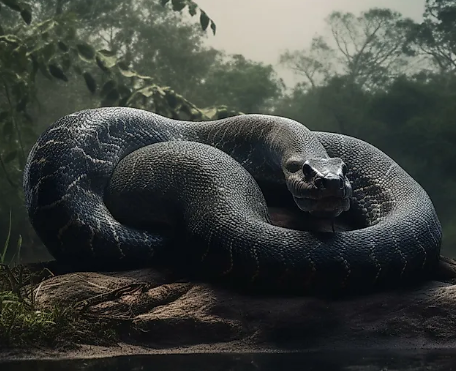
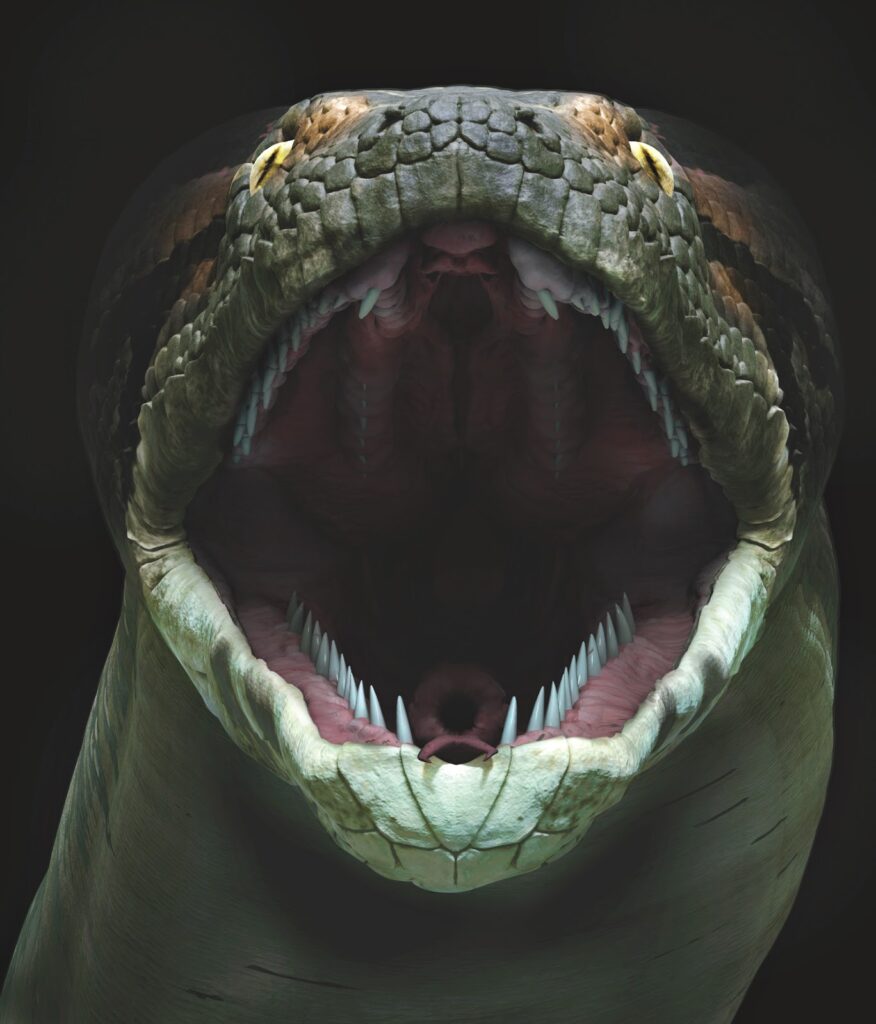
No — Vasuki isn’t alive today. But its fossilized remains, discovered in Gujarat’s ancient rock layers, tell a spine-chilling story of what once was. Scientists estimate that Vasuki indicus measured between 11 and 15 meters long — nearly the size of a city bus. That makes it one of the largest snakes ever discovered on Earth, possibly even rivaling the legendary Titanoboa of South America.
Imagine a serpent powerful enough to coil around a crocodile or crush a prehistoric mammal — that was Vasuki’s world.
What Exactly Did Scientists Find?
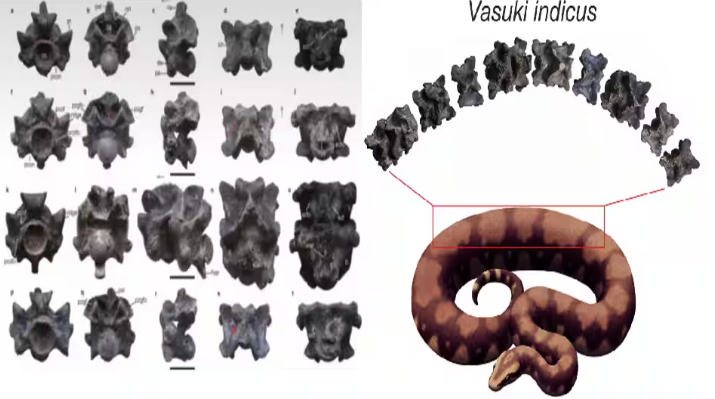
Contrary to viral rumors, researchers did not find a full skeleton. What they uncovered were 27 gigantic vertebrae, perfectly preserved within the earth. These bones were enough to reconstruct the body size, movement, and structure of the ancient snake.
The fossils were discovered in the Naredi Formation of Gujarat, a region rich in Eocene-era sediments. This time period, around 47 million years ago, was much warmer and wetter than today — perfect conditions for reptiles to grow to gigantic sizes.
The snake belonged to a long-extinct family called Madtsoiidae, a group of ancient serpents that once slithered across the supercontinent Gondwana. They were not venomous but powerful constrictors, capable of overpowering large prey through sheer muscle strength.
Why the Discovery Shocked Scientists
There were three reasons the discovery made headlines across the world:
- The Size:
The vertebrae’s dimensions pointed to an animal far bigger than any living snake, possibly reaching 50 feet in length. Such proportions defied earlier theories about the limits of reptile growth in Asia. - The Preservation:
The vertebrae were remarkably well-preserved, giving scientists rare insights into how ancient snakes evolved after India drifted away from Africa and before colliding with Asia. - The Implications:
The find reshaped our understanding of India’s ancient ecosystems. It revealed that prehistoric India, once an isolated landmass, supported gigantic reptiles, lush forests, and tropical wetlands — a paradise for cold-blooded giants.
A Journey Through Time
The story of Vasuki’s discovery actually began decades ago. Fossils collected from the Panandhro mine were initially stored without realizing their significance. It was only in recent years that Indian paleontologists re-examined them using advanced imaging techniques and comparative analysis.
As they measured each vertebra, the team realized they were dealing with something unprecedented — not just another fossil, but a creature that could redefine India’s prehistoric legacy.
The Legend Meets Science
In Hindu mythology, Vasuki was a serpent king who played a key role in the Samudra Manthan (Churning of the Ocean). In science, Vasuki indicus is now a symbol of India’s geological and evolutionary richness.
Both the myth and the fossil share one thing — a sense of awe. One belongs to spiritual imagination, the other to scientific discovery, but both remind us how deeply the serpent is woven into India’s identity — from temples to tectonic layers.
The Mystery Continues
Scientists believe that more fossils from the same layer might still be buried beneath Gujarat’s soils. Each new find could reveal more about how Vasuki lived, hunted, and adapted in the tropical climate of Eocene India.
For now, what remains certain is this: Vasuki indicus is not a myth. It’s real, it’s ancient, and it’s an astonishing chapter in Earth’s history — one that places India at the heart of one of the greatest paleontological discoveries of the century.
Key Facts About Vasuki Indicus
- Scientific Name: Vasuki indicus
- Discovered in: Panandhro Lignite Mine, Kutch, Gujarat
- Age: Around 47 million years old (Eocene epoch)
- Estimated Length: 11–15 meters (36–50 feet)
- Family: Madtsoiidae (extinct constrictor snakes)
- Environment: Tropical wetlands and forests
- Named After: Vasuki, the mythological serpent of Hindu legends
Final Word
The discovery of Vasuki indicus is more than a scientific milestone — it’s a reminder of India’s vast, untold natural history. Buried under layers of rock and time, the Earth still holds secrets waiting to be unearthed. And sometimes, those secrets carry the name of a god.
#Vasuki Indicus, #Giant Snake in Gujarat, #Vasuki Snake Fossil, #Giant Snake India, #Prehistoric Snake, #Gujarat Paleontology, #Vasuki Indicus Discovery, #Indian Fossil News, #Ancient Snakes, #Titanoboa India