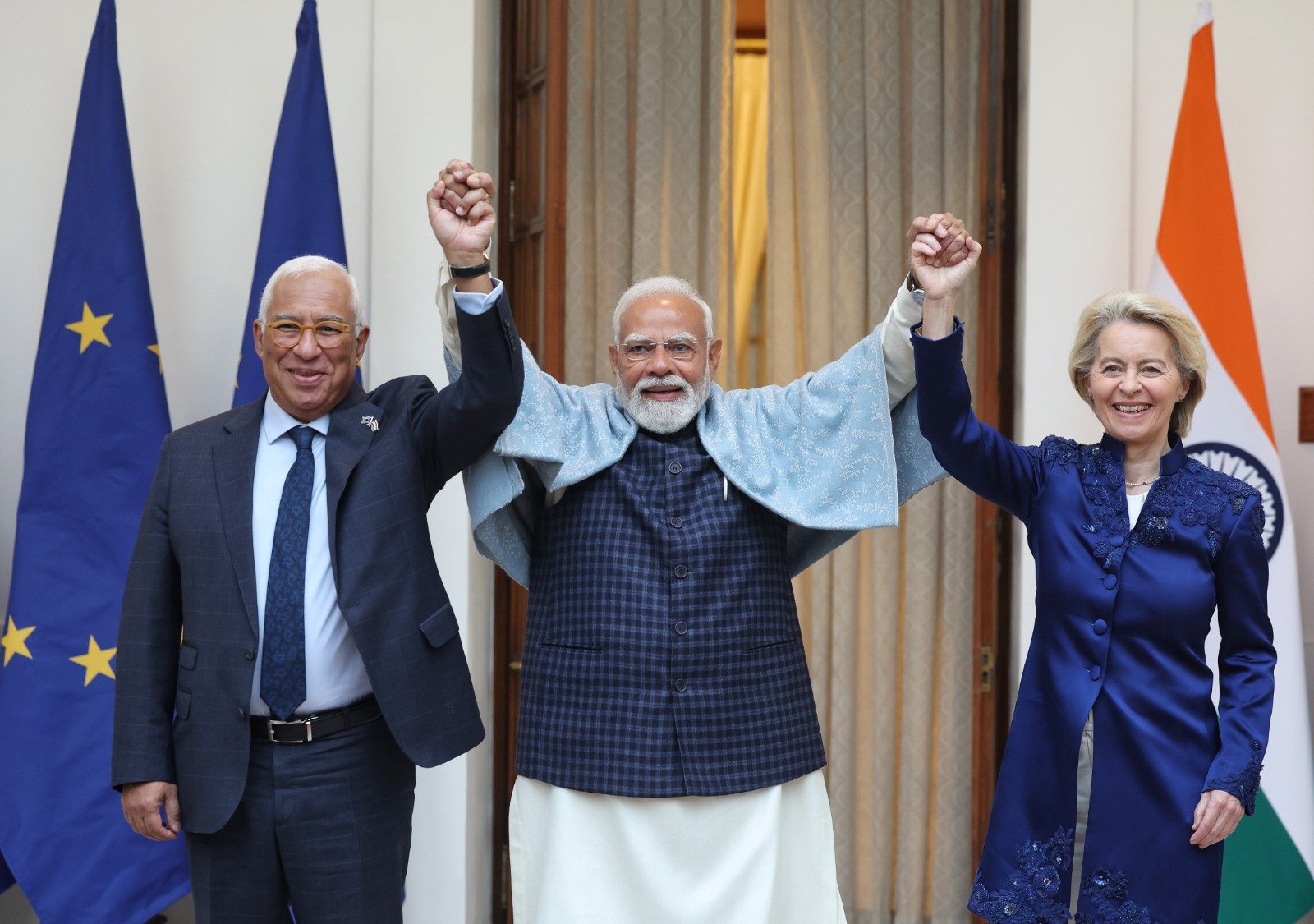
The long-awaited India–European Union Free Trade Agreement (India–EU FTA) is being hailed as the “mother of all deals” by European Commission President Ursula von der Leyen, and for good reason. Once implemented, the agreement will open preferential access for Indian goods and services to 27 EU markets, covering nearly 450 million consumers with high purchasing power.
For India, this is not just another trade pact. It is a transformational economic partnership that directly touches manufacturing hubs, MSMEs, farmers, artisans, coastal communities, and technology clusters across multiple states. From textiles and pharmaceuticals to seafood, electronics, handicrafts, and engineering goods, the FTA promises to reshape India’s export landscape while generating large-scale employment.
Let’s look at how this landmark trade agreement will benefit India; state by state.
Maharashtra & Gujarat: Manufacturing and Export Powerhouses to Gain Big
Maharashtra
Maharashtra is poised to emerge as one of the biggest beneficiaries.
- Ichalkaranji: Apparel exports
- Pune: Engineering, electronics, medical devices
- Thane–Raigad & Mumbai: Pharma, gems and jewellery
With reduced EU tariffs and smoother market access, Maharashtra’s MSMEs and labour-intensive industries are expected to witness strong export growth. Pharma and medical devices from Pune and Mumbai, along with textile clusters like Ichalkaranji, will gain competitive pricing in Europe, accelerating both production and employment.
Gujarat
Gujarat’s export-driven economy stands to receive a major boost.
- Surat: Textiles and diamonds
- Bharuch–Vadodara: Chemicals and pharmaceuticals
- Rajkot & Veraval: Engineering goods and marine exports
The FTA strengthens Gujarat’s position in diamonds, chemicals, pharma, and marine products. Lower duties and regulatory cooperation will help MSMEs scale faster while reinforcing Gujarat’s status as a global manufacturing hub.
Uttar Pradesh & Rajasthan: Labour-Intensive MSMEs and Artisan Clusters to Thrive
Uttar Pradesh
The agreement offers powerful momentum to labour-intensive exports:
- Kanpur & Agra: Leather footwear
- Saharanpur: Furniture and handicrafts
- Noida & Western UP: Electronics and agri exports
These regions depend heavily on MSMEs and skilled labour. Preferential EU access will significantly increase demand for leather goods, handicrafts, electronics, and agricultural products — translating into higher rural and semi-urban employment.
Rajasthan
Rajasthan’s traditional industries will gain new international reach:
- Jaipur: Gems and jewellery
- Jodhpur: Furniture and handicrafts
- Churu: Sports goods, textiles, and leather
Export growth here will strengthen artisan clusters and value chains, helping preserve traditional crafts while creating sustainable livelihoods.

Assam & West Bengal: Tea, Marine Products, and Traditional Exports Enter New Markets
Assam
Assam’s iconic tea and niche products will find expanded European demand.
- Dibrugarh–Jorhat: Tea
- Upper Assam, Barpeta–Nalbari: Spices and bamboo crafts
The FTA also opens doors for niche pharmaceuticals and minerals, supporting plantation workers, artisans, and MSMEs across the region.
West Bengal
West Bengal benefits through both agriculture and marine exports:
- North Bengal: Darjeeling tea
- Digha & Haldia: Marine exports
Traditional handicrafts and agri products are expected to see higher demand, boosting rural employment and labour-intensive export sectors.
Andhra Pradesh & Telangana: Pharma, Electronics, and Coastal Exports to Scale Up
Andhra Pradesh
Andhra Pradesh’s coastal export hubs will gain scale:
- Vizag & Kakinada: Shrimp and seafood
- Vizag: Pharma, chemicals, electronics
The agreement strengthens export-led growth in processing-intensive sectors, supporting coastal employment and value-added manufacturing.
Telangana
Telangana emerges as a key beneficiary in high-value manufacturing:
- Hyderabad–Warangal: Textiles and apparel
- Hyderabad: Pharma, electronics, medical devices
Engineering goods and medical products will benefit from EU tariff preferences, driving skilled jobs and industrial expansion.
Tamil Nadu & Kerala: Manufacturing Hubs and Coastal Livelihoods Strengthened
Tamil Nadu
Tamil Nadu’s diversified manufacturing ecosystem stands to gain significantly:
- Tiruppur: Apparel exports
- Vellore–Ambur: Leather and footwear
- Chennai & Coimbatore: Engineering and electronics
Large employment gains are expected across textiles, leather, and electronics, reinforcing Tamil Nadu’s leadership in export manufacturing.
Kerala
Kerala’s coastal and agri-processing sectors receive a boost:
- Kochi & Alappuzha: Shrimp and tuna
- Idukki & Wayanad: Spices
Export growth will support coastal livelihoods, spice farmers, and agri-processing jobs, while pharma exports are also expected to rise.

Why the EU Calls It the “Mother of All Deals”
EU President Ursula von der Leyen described the India–EU FTA as the “mother of all deals” because of its unprecedented scale and strategic depth:
- It connects two major economic blocs with a combined market of over 1.8 billion people.
- It covers not just goods, but services, investment, digital trade, sustainability, and supply chains.
- It strengthens geopolitical cooperation between democratic partners at a time of global uncertainty.
- It diversifies EU supply chains away from over-dependence on single regions while positioning India as a trusted manufacturing partner.
For Europe, India represents one of the fastest-growing large economies. For India, the EU offers high-value markets, advanced technology, and long-term investment.
Beyond Exports: Wider Benefits for India
The India–EU FTA goes far beyond trade numbers.
1. Massive Job Creation
Labour-intensive sectors such as textiles, leather, handicrafts, marine products, and MSMEs will generate millions of direct and indirect jobs across urban and rural India.
2. MSME Empowerment
Small businesses gain easier access to European markets through reduced tariffs, simplified standards, and regulatory cooperation.
3. Boost to Manufacturing
Engineering goods, electronics, medical devices, and chemicals receive fresh momentum under export-led growth, supporting the Make in India vision.
4. Higher Foreign Investment
European companies are expected to expand investments in Indian manufacturing, logistics, clean energy, and technology.
5. Technology & Skills Transfer
Collaboration in green tech, digital systems, pharmaceuticals, and advanced manufacturing will help India upgrade skills and production capabilities.
6. Stronger Global Positioning
The deal elevates India’s role in global value chains and reinforces its status as a reliable economic partner.
A Defining Moment for India’s Growth Story
The India–EU Free Trade Agreement marks a defining chapter in India’s economic journey. By unlocking access to 27 European markets and empowering states across the country, the pact lays the foundation for export-led growth, industrial expansion, and inclusive development.
From tea gardens in Assam to textile units in Tiruppur, from pharma labs in Hyderabad to seafood processors in Vizag, the benefits of this historic agreement will be felt nationwide.
Truly, this is not just a trade deal; it is a catalyst for India’s next growth leap, justifying its global recognition as the “mother of all deals.”