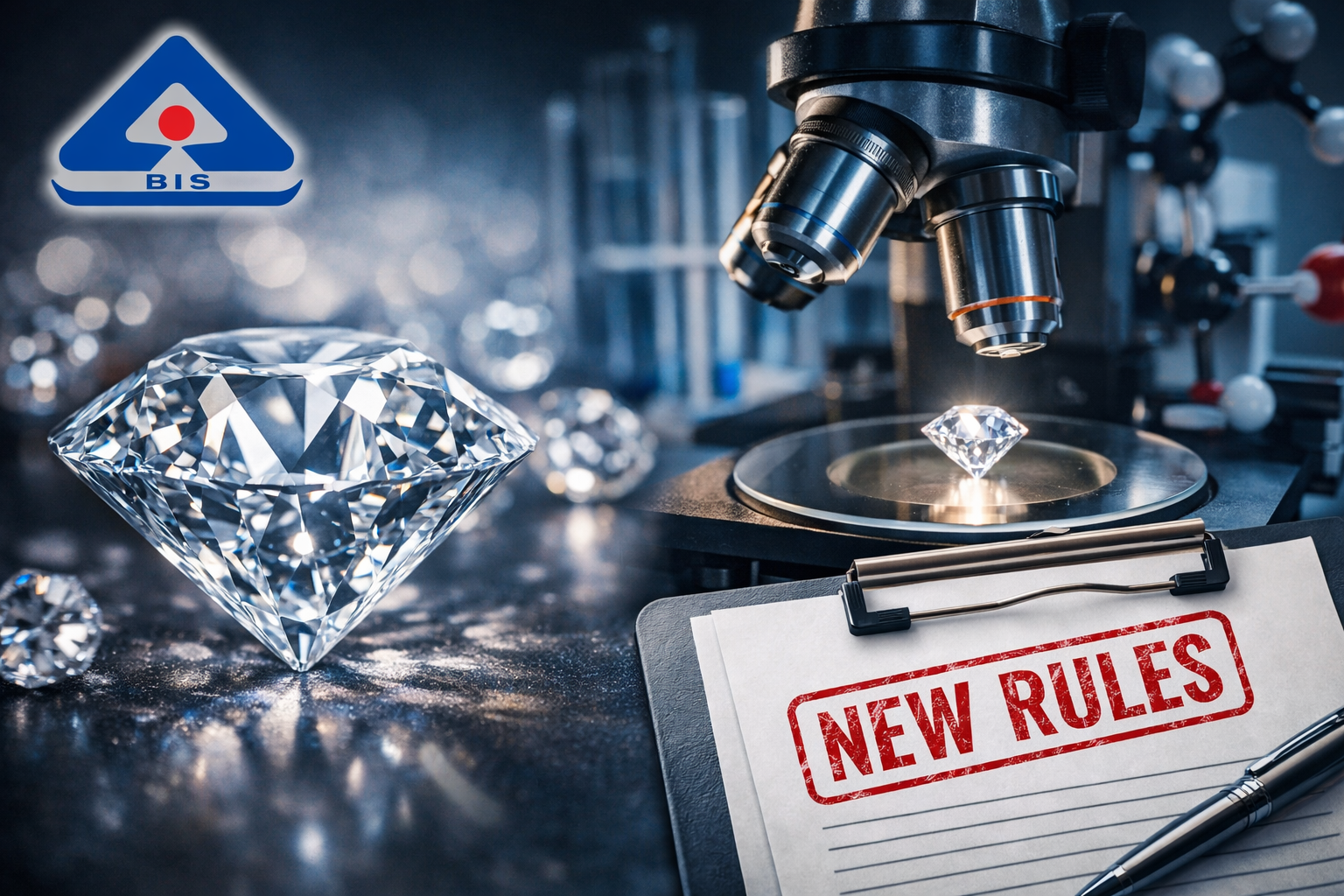
New Delhi: In a major regulatory move aimed at protecting consumers and strengthening trust in India’s fast growing jewellery sector, the Bureau of Indian Standards has notified IS 19469:2025, Jewellery Consumer Confidence in the Diamond Industry.
The new standard brings strict clarity to how diamonds must be described, marketed and disclosed across India. Most importantly, it draws a clear distinction between natural diamonds and laboratory grown diamonds, ending years of confusion in the retail marketplace.
The standard is a modified adoption of ISO 18323:2015 issued by the International Organization for Standardization and aligns India with internationally accepted terminology practices.
Diamond Means Natural Diamond
Under IS 19469:2025, the term diamond can be used only for natural diamonds formed in the earth over billions of years.
If a stone is created in a laboratory, it must be clearly described in full as:
• Laboratory grown diamond
• Laboratory created diamond
Abbreviations such as LGD or shortened expressions like lab diamond are not acceptable if they create ambiguity.
The rule ensures that consumers are not misled by vague marketing language and that the origin of the stone is clearly communicated at the point of sale.
Treatments Must Be Disclosed
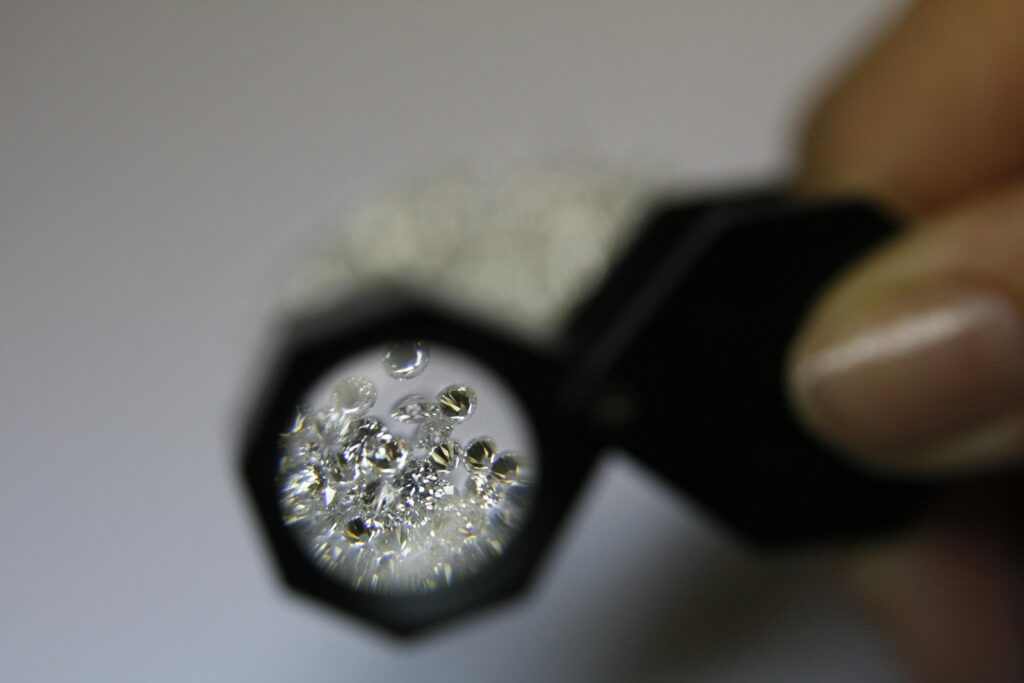
The standard makes it compulsory for sellers to disclose any treatment or enhancement carried out on a diamond.
Mandatory disclosure applies to processes such as:
• High Pressure High Temperature treatment
• Chemical Vapour Deposition growth
• Colour enhancement
• Clarity enhancement
If a diamond’s natural characteristics have been altered in any way, the buyer must be informed. This applies across physical retail stores, online platforms and export documentation.
Why This Reform Is Significant
India is not just another diamond market. It is the backbone of the global diamond processing industry.
Key industry data shows:
• India cuts and polishes nearly 90 percent of the world’s diamonds by volume.
• The gems and jewellery sector contributes around 7 percent to India’s GDP directly and indirectly.
• Annual gems and jewellery exports in recent financial years have ranged between USD 32 billion and USD 40 billion depending on global demand.
• Cut and polished diamonds account for a substantial share of this export basket.
• Laboratory grown diamond exports have crossed USD 1 billion in recent financial years and continue to grow.
The rapid rise of laboratory grown diamonds, which are often 40 to 80 percent cheaper than comparable natural diamonds, has transformed the market. Younger consumers, online jewellery platforms and sustainability marketing have accelerated demand for lab grown stones.
However, inconsistent terminology and aggressive promotional language created grey areas. Many buyers were unclear about what exactly they were purchasing.
IS 19469:2025 aims to eliminate that confusion.
Surat and India’s Global Role
The city of Surat remains the global nerve centre of diamond cutting and polishing. Lakhs of workers are directly or indirectly employed in the diamond ecosystem there. Any regulatory clarity introduced in India therefore has global implications for trade credibility and export confidence.
By adopting internationally aligned definitions, India strengthens its position against other global trading hubs and enhances trust among overseas buyers.
Natural vs Laboratory Grown Diamonds: What Buyers Should Know
| Feature | Natural Diamond | Laboratory Grown Diamond |
|---|---|---|
| Origin | Formed naturally under the earth over billions of years | Created in laboratories using advanced technology |
| Formation Process | Natural heat and pressure inside the earth | High Pressure High Temperature or Chemical Vapour Deposition methods |
| Time Taken | Billions of years | Weeks to months |
| Legal Use of Term Diamond | Can be called Diamond | Must be called Laboratory Grown Diamond or Laboratory Created Diamond |
| Price Range | Generally higher due to rarity | Typically 40 to 80 percent lower |
| Rarity | Naturally scarce | Produced as per demand |
| Disclosure Requirement | Treatment must be disclosed | Growth method and treatments must be disclosed |
Global Market Revenue Comparison
💎 NATURAL DIAMONDS
⬛ Global Market Value (2024-25)
USD 80 to 90 Billion (rough and polished trade)
⬛ Jewellery Market Contribution
Major share of global diamond jewellery market valued at over USD 400 Billion
⬛ Growth Rate
Stable growth at around 3 to 5 percent annually
⬛ Market Position
Dominates global revenue and premium segment
⬛ Pricing
Higher prices due to natural rarity and long formation process
⬛ Major Markets
USA, China, India, Europe
🧪 LABORATORY GROWN DIAMONDS
⬛ Global Market Value (2024-25)
USD 25 to 30 Billion
⬛ Projected Market Size (2030+)
Expected to reach USD 60 to 90 Billion
⬛ Growth Rate
Fast growing at 10 to 15 percent annually
⬛ Market Position
Rapidly expanding affordable luxury segment
⬛ Pricing
Typically 40 to 80 percent cheaper than natural diamonds
⬛ Major Markets
USA leading, strong growth in India and Europe
Key Insight
Natural diamonds still hold the majority revenue share globally. However, laboratory grown diamonds are the fastest growing segment, making clear disclosure rules essential for consumer protection and fair trade practices.
If you want a more visually striking web format, I can structure it in a bold infographic style.
A Structural Shift, Not Just a Labelling Change
Industry observers say this is more than a naming rule. It is a structural reform that affects:
• Retail showrooms
• Online jewellery platforms
• Certification laboratories
• Export houses
• International trade contracts
Clear definitions reduce disputes, improve compliance and protect consumers in high value purchases such as wedding jewellery and investment pieces.
The Bottom Line for Consumers
If it is called diamond alone, it must be natural.
If it is laboratory grown, it must be clearly stated.
If it is treated, it must be disclosed.
With IS 19469:2025 now in force, buying a diamond in India comes with greater transparency, stronger consumer protection and clearer accountability across the trade.
In a multi billion dollar industry where trust determines value, clarity may be the most valuable reform of all.