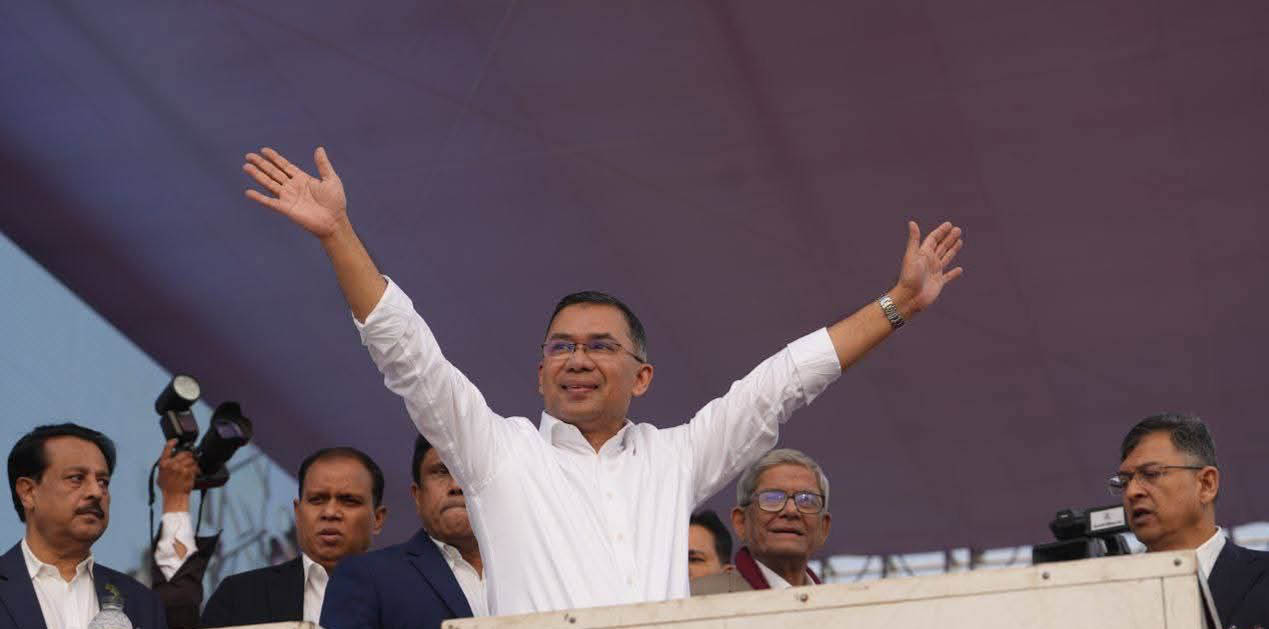
Tarique Rahman has claimed a massive victory for the Bangladesh Nationalist Party (BNP) in Bangladesh’s 13th parliamentary elections, positioning himself to become the country’s next Prime Minister. The polls, held amid sweeping political changes, mark the first general election since the 2024 political upheaval and the passing of former Prime Minister Khaleda Zia.
According to party figures, the BNP and its allies are leading in over 200 of the 299 parliamentary seats, a decisive mandate that signals a dramatic shift in Bangladesh’s political landscape. Rahman, who formally assumed the chairmanship of the BNP on January 9 following his mother’s death, has requested party workers to refrain from public celebrations and instead offer prayers in her memory.
How the BNP Victory Came About
The 2026 election was shaped by extraordinary circumstances:
- The continued ban on the Awami League, led by former Prime Minister Sheikh Hasina.
- The absence of Khaleda Zia, a towering political figure whose leadership defined BNP politics for decades.
- Public anticipation for what was billed as a transparent and competitive electoral process following the 2024 unrest.
Voter turnout was notably high, with long queues forming outside polling stations from as early as 6 am. Observers described the day as largely peaceful, with Bangladesh’s Election Commission reporting only minor disruptions.
Rahman himself reportedly won from both Bogra and Dhaka-17 constituencies, strengthening his claim to the premiership. If officially confirmed, he is set to take office as Prime Minister, ushering in a new political era.
Recent Incidents and Controversies
Despite the overall peaceful polling day, the election season was not without turbulence:
- At least five people were killed and over 600 injured in clashes during campaigning.
- The Bangladesh Jamaat-e-Islami raised “serious questions about the integrity of the results process,” alleging irregularities in certain constituencies.
- Official results were still awaited at the time of claims and counterclaims.
International reactions began pouring in quickly. Pakistan Prime Minister Shehbaz Sharif congratulated Rahman on his electoral success, while Indian National Congress president Mallikarjun Kharge extended his greetings, emphasizing the importance of democratic and inclusive governance in Bangladesh.
A Pivotal Moment in Bangladesh’s Politics
The 13th parliamentary elections mark a turning point. The political vacuum created by Khaleda Zia’s death and the sidelining of the Awami League has reshaped the electoral battlefield. Rahman now carries both the legacy of his mother and the burden of governing a nation navigating economic challenges, social tensions, and regional diplomatic complexities.
His call to postpone celebrations reflects an attempt to balance political triumph with personal loss and party discipline. It also signals a possible effort to project a more measured and statesmanlike image as he prepares for national leadership.
How Will Relations with India Evolve?
India and Bangladesh share deep historical, cultural, and economic ties. Trade, border management, water-sharing agreements, and regional security cooperation are central pillars of bilateral relations.
Under Sheikh Hasina’s leadership, India-Bangladesh ties strengthened significantly, particularly in counterterrorism cooperation and connectivity projects. With BNP returning to power, analysts expect:
- A recalibration rather than a rupture in ties.
- Continued economic engagement, given India’s strategic importance.
- Possible renewed emphasis on sovereignty and balanced diplomacy between regional powers.
BNP governments in the past have had a more cautious approach toward India compared to the Awami League. However, geopolitical realities and economic interdependence suggest that Rahman’s administration is likely to maintain pragmatic relations while seeking broader regional partnerships.
What Happens Next?
The Election Commission’s formal declaration will confirm the final seat tally. If the BNP’s sweeping lead holds, Tarique Rahman is poised to become Bangladesh’s next Prime Minister.
The election represents not just a transfer of power but the beginning of a new political chapter — one shaped by generational change, shifting alliances, and renewed public expectations for stability, transparency, and inclusive governance.
Bangladesh now stands at a crossroads. Whether this transition brings sustained stability or renewed political contestation will depend on how the incoming leadership manages both domestic challenges and regional diplomacy in the months ahead.